
I’ve been a gay men’s specialist psychotherapist for over 33 years in 2025, and I identify as a psychotherapist, Licensed Clinical Social Worker, life/career/relationship Coach, AASECT Certified Sex Therapist, activist, author, and educator. But in all those, I’ve been a Psychiatric Social Worker, and that means my training and experience have given me the credentials to work with gay men who are affected by some of the more frequent psychiatric disorders, disorders which are often treated with medication combined with therapy, as Depression, Anxiety, Bipolar Disorder, ADHD, OCD, and PTSD, and, earlier in my career, Schizophrenia.
For many gay men, deciding whether to take psychiatric medication — or even talk to a psychiatrist — can stir up a complicated mix of curiosity, skepticism, fear, and shame. After all, our community has a long history with psychiatry that’s not always been kind. Until 1973, the American Psychiatric Association’s DSM listed homosexuality itself as a mental disorder — a designation that scarred generations of gay men and legitimized everything from “conversion therapy” to outright abuse.
So it’s understandable that when someone suggests a pill might help with anxiety, depression, or trauma, our first instinct might be: “I don’t want to be drugged.” “I’m not crazy.” or “I can handle this myself.” But here’s the truth — and what I’ve seen over 33 years as a Certified Psychiatric Social Worker and gay men’s specialist therapist: psychiatric medications aren’t about weakness. They’re about freedom.
(My own Master of Social Work training at the University of Southern California’s Suzanne Dworak-Peck School of Social Work included a concentration in Mental Health with a sub-specialization in Psychiatric Social Work — focused on helping clients whose challenges often require collaboration with psychiatrists and evidence-based use of medication to restore functioning and well-being.)
Functions: Relief, Restoration, and Resistance
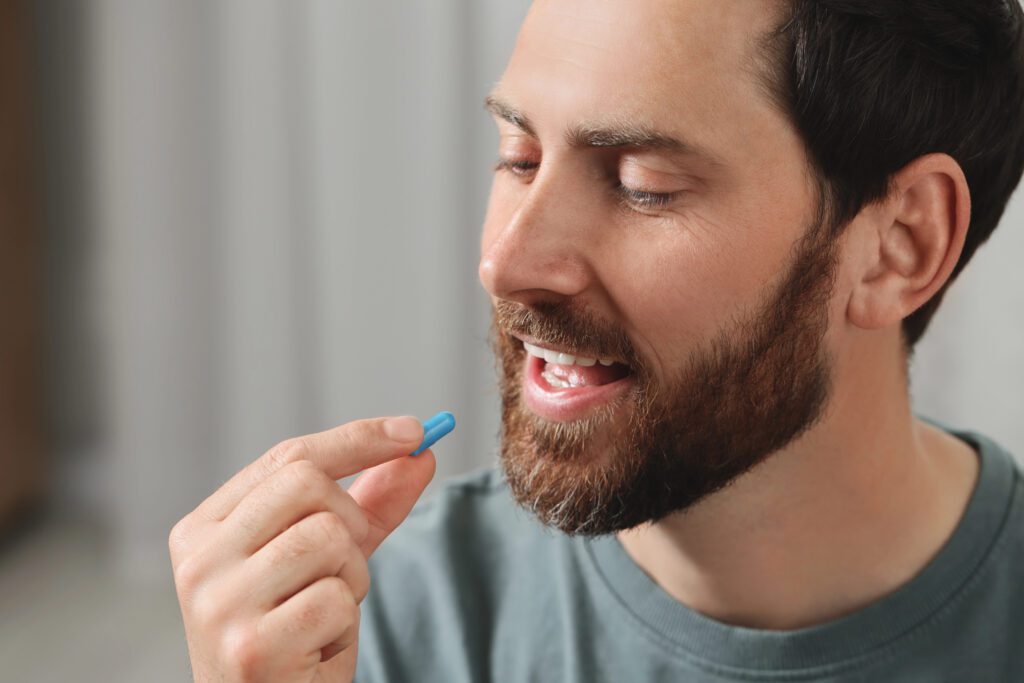
Psychiatric medications aren’t magic bullets — but they are tools. Used properly, they serve three essential functions: symptom relief, increased functioning, and fighting back against biology. The point of medication isn’t to change who you are; it’s to help you return to yourself — the self that existed before illness took over.
Related reading:
Gay Men and Depression: Four Strategies for Help •
Gay Men’s Depression Coping Guide •
Conquering Anxiety with Probability
Targeting the Right Issues — Not Moral Panic
Psychiatric medication should always target legitimate, diagnosable disorders — not moral panic or pseudoscience. Conditions like depression, anxiety, bipolar disorder, ADHD, and PTSD are biologically supported and well-studied. But so-called “sex addiction” and “porn addiction” are not recognized in the DSM-5 — and for good reason. These are moral constructs, not medical diagnoses.
More on this perspective:
Gay Men and the Myth of Sex Addiction
Fears & Myths — Let’s Debunk Them
Myth 1: “Meds will change my personality.”
Properly prescribed medication does not erase who you are; it reduces symptom interference so your baseline self can re-emerge. Many clients describe it as “the static is finally gone.” In therapy, that often means you can actually use the strategies we discuss because your brain isn’t drowning in noise.
See also:
Gay Male Relationships and the ADD/OCD Syndrome •
Loving Someone with Obsessive-Compulsive Disorder (OCD)
Myth 2: “I’ll be on them forever.”
Some people use medication during a stabilization window and later taper under medical supervision; others benefit from maintenance because it prevents relapse. The plan is individualized. You and your psychiatrist decide together, and we revisit it as your life evolves.
Myth 3: “Antidepressants will kill my sex drive.”
Side effects vary by person and by agent. They’re often temporary and manageable through dose adjustments, timing, switching within class, or choosing alternatives with different sexual-side-effect profiles. The key is honest feedback to your prescriber and coordinated care with your therapist so we can fine-tune.
Myth 4: “SSRIs cause suicide.”
The data behind youth warnings emphasize close monitoring at initiation — not that antidepressants broadly “cause” suicide. In adults, appropriate treatment generally reduces risk by relieving the depression that drives suicidal thinking. This is why collaboration and regular follow-up matter.
Myth 5: “If I were stronger, I wouldn’t need meds.”
We don’t tell people to white-knuckle high blood pressure or diabetes. Brain chemistry deserves the same respect. Medication is not a character judgment; it’s one evidence-based tool among many to help you live the life you want.
Facts: Safety, Evidence, and What Gets Better
SSRIs like Lexapro, Zoloft, and Prozac have been among the safest and most studied medications in modern psychiatry. Untreated mental illness carries greater risk — for health, work, relationships, and vulnerability to self-medication — than appropriately prescribed medication. Many clients report improvements in sleep, concentration, energy, and emotional bandwidth within weeks when the right medication and dose are found.
My extended discussion of this:
Gay Men and Psychiatric Medications: Overcoming Fears and Making Them Work
Why Gay Men Hesitate — And What to Remember
Our community’s history with psychiatry is painful — from electroshock “therapy” in mid-century hospitals to contemporary debates that sometimes revive old stigmas. It’s no wonder there’s mistrust. But the goal of psych meds isn’t conformity; it’s vitality. Gay men who combine therapy with appropriate medication often tell me, “I finally feel like myself again.” That’s not compliance — that’s liberation.
Related pieces:
Gay Men and Moving On in Life After Trauma •
Gay Men and Trauma Recovery: Reclaiming Your Life
Collaboration: Therapy + Psychiatry = Better Outcomes
Ideally, therapy and medication work together. As a Certified Psychiatric Social Worker, I bridge the psychological and biological perspectives so your plan is coordinated, humane, and data-driven. With consent, I regularly collaborate with psychiatrists to ensure you feel empowered — not overruled — in your own care. Medication should be part of your strategy, not your identity.
More on navigating health systems:
Gay Men and Medical Care: Navigating the System
Call to Action: Get the Kind of Help That Works for You
If you’re in California and ready to feel better, I offer therapy that’s tailored to gay men — culturally competent, sex-positive, and grounded in evidence-based methods. We’ll map your symptoms, goals, and daily pressures, then decide together whether medication should be part of your plan. When it is, I help you prepare for the psychiatry visit, track early changes, coordinate feedback, and adjust course so the treatment works for your actual life.
If you’re outside California, I also offer coaching for gay men worldwide through a practical, goal-focused framework. Coaching can support daily structure, relationship skills, career momentum, and creative blocks — the real-life contexts where symptom relief translates into a better life.
Start here:
GayTherapyLA.com (therapy in California) •
GayCoachingLA.com (coaching worldwide)
Call or text: 310-339-5778 •
Email: Ken@GayTherapyLA.com